
Blue Zones – Lessons from the World’s Longest- Living Communities
When we think about living a long and healthy life, it’s easy to focus on the latest diets, supplements, or fitness trends. However, some of the world’s healthiest and longest-living people have achieved remarkable longevity without any of these modern interventions.
The concept of Blue Zones was developed after researchers identified several regions around the world where people consistently live longer, healthier lives than the global average. These communities not only boast high numbers of people living into their 90s and beyond, but they also experience lower rates of chronic diseases such as heart disease, diabetes, and dementia.
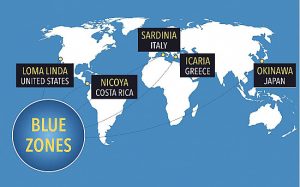
The five recognised Blue Zones are Okinawa (Japan), Sardinia (Italy), Ikaria (Greece), Nicoya (Costa Rica), and Loma Linda (California, USA). Despite being separated by geography, culture, and language, these communities share a surprising number of common lifestyle habits.
One of the most consistent findings is that people in Blue Zones move naturally throughout the day. Rather than spending hours in a gym, they walk regularly, garden, perform household tasks, and remain physically active well into old age. Exercise is not a scheduled event but simply part of daily life.
Strong social connections also play a critical role. People in Blue Zones often live within close-knit communities where family, friends, and neighbours remain central throughout life. Research consistently shows that meaningful relationships contribute significantly to happiness, mental health, and longevity. Many Blue Zone residents maintain active social circles and regularly participate in community activities regardless of age.
Another common factor is having a sense of purpose. The Okinawans refer to it as ikigai, while Nicoyans call it plan de vida – both loosely translating to “a reason to get up in the morning.” Having goals, responsibilities, and a sense of meaning appears to contribute not only to improved wellbeing but potentially to a longer life.
Diet is naturally an important component. While the foods consumed vary between regions, Blue Zone diets are generally based on whole, minimally processed foods. Vegetables, legumes, whole grains, fruits, and nuts feature prominently, while highly processed foods and excess sugar are less common. Interestingly, moderation often matters more than restriction. Many Blue Zone cultures practise habits that discourage overeating and promote mindful consumption.
Perhaps the most encouraging lesson from Blue Zones is that longevity is rarely the result of a single breakthrough or secret formula. Instead, it is the accumulation of small, consistent habits practiced over decades. Regular movement, nutritious food, strong relationships, purpose, and community all work together to create an environment that supports healthy ageing.
For those planning for retirement, the Blue Zones offer an important reminder: financial security is only one part of a successful future. While careful financial planning helps create freedom and choice, maintaining your health, relationships, and sense of purpose may be just as important in determining the quality of your later years.
After all, the ultimate goal is not simply to live longer, but to enjoy more years of good health, independence, and fulfilment.